If you're looking at building options for your farm or commercial property, you've probably come across the term post frame construction. Maybe you've heard it called pole barn construction or post and beam building. Whatever name you've heard, the basic idea is the same - and it's been around for a long time because it works.
At MaxBuilt, we've spent years building post frame structures across Western Canada. In this guide, I'll walk you through what post frame construction actually is, how it differs from other building methods, and why it might be the right fit for your next project.
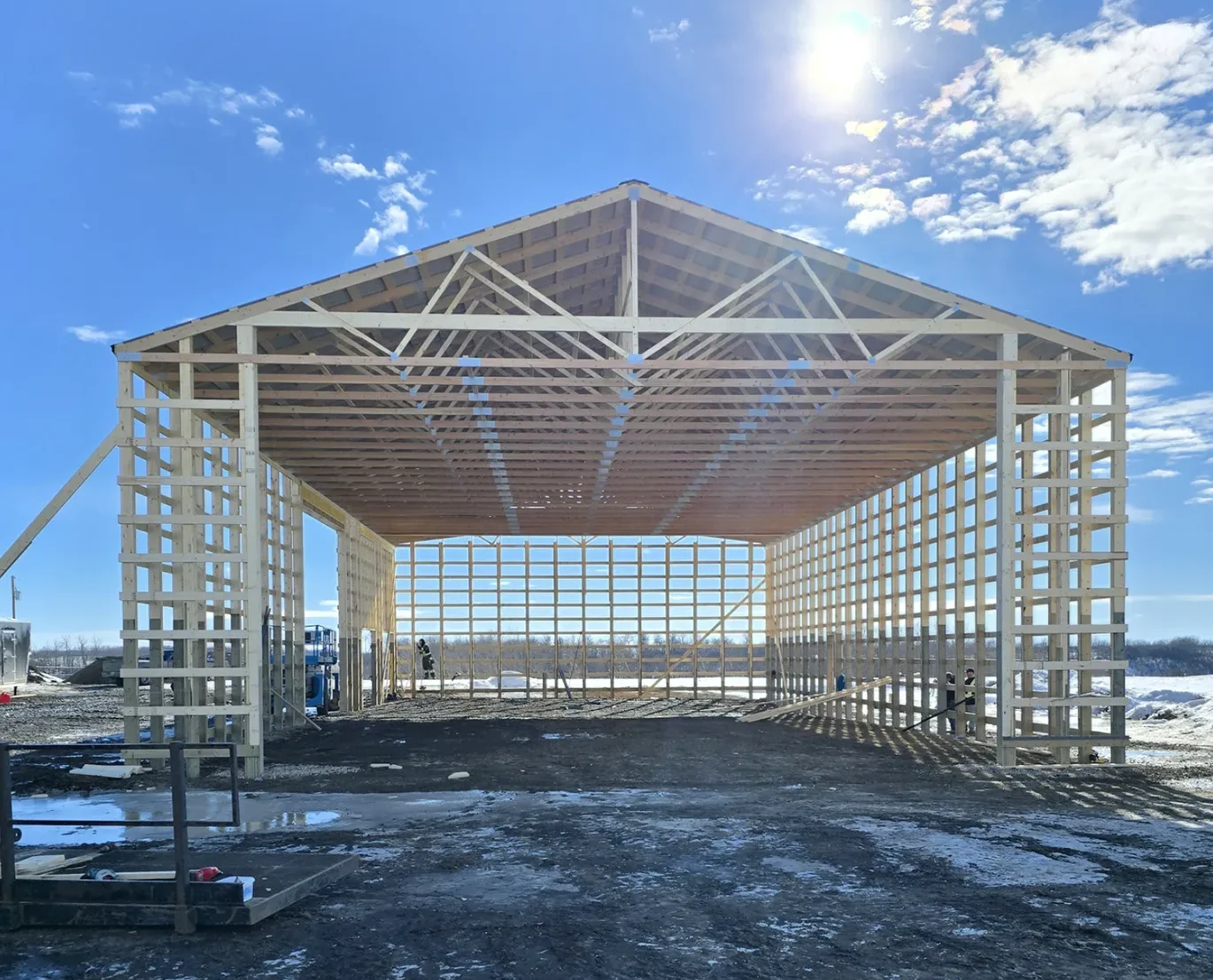
Post frame construction is a building method that uses large posts or columns buried in the ground (or anchored to a foundation) as the main structural support. These posts carry the roof load and transfer it directly to the ground, which means you don't necessarily need a continuous concrete foundation like you would with conventional stick-frame buildings.
The posts are typically spaced 4 to 8 feet apart, and horizontal girts (wall framing) and purlins (roof framing) connect them together. The result is a strong, open structure that can span large distances without needing interior support walls.
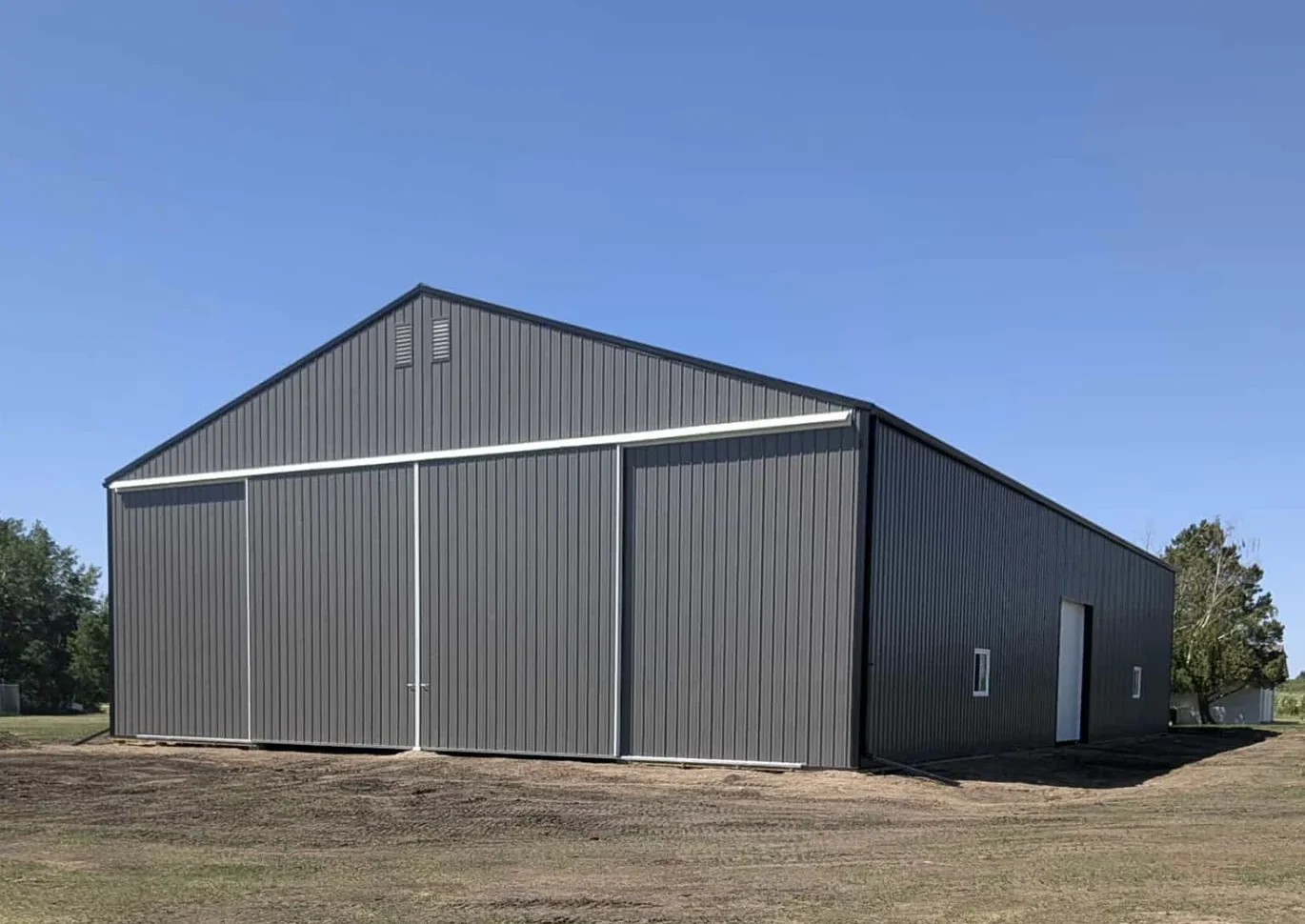
You'll see post frame buildings used for machine sheds, barns, shops, garages, riding arenas, warehouses, and even homes (often called barndominiums). The method has been refined over the decades, and modern post frame buildings can be just as polished and energy-efficient as any conventional structure.
Understanding our post frame construction process helps you know what to expect. Here's how it typically goes:
1. Site preparation and layout. We mark out where the posts will go and make sure the site is level enough to work with.
2. Setting the posts. Holes are drilled or augered into the ground, typically 4 to 6 feet deep depending on frost depth and soil conditions. The posts are set in place with concrete footing pads beneath them for load distribution and uplift resistance.
3. Framing the walls and roof. Horizontal girts are attached to the posts to create the wall framing, and trusses are set on top. Purlins run across the trusses to support the roof panels.
4. Sheathing and finishing. Metal panels (or other cladding) go on the walls and roof. Doors, windows, insulation, and interior finishes are added based on the building's intended use.
The whole process moves quickly compared to conventional construction. Because the posts carry the structural load, there's less material needed overall, and fewer steps to get the building enclosed.
The main difference comes down to how the building carries its load.
In stick-frame (or conventional) construction, the walls are built from 2x4 or 2x6 studs spaced 16 inches apart. These walls sit on a continuous concrete foundation and work together to support the roof. You need a lot of lumber, a lot of fasteners, and a solid foundation running the entire perimeter.
In post frame construction, the posts do the heavy lifting. They're spaced further apart, and the horizontal framing between them doesn't need to be as beefy. You can use concrete piers or pads instead of a full foundation, which saves time and money.
Post frame buildings also give you clear-span interiors more easily. Because the posts and trusses handle the load, you don't need load-bearing walls inside. That's why post frame is so popular for machine sheds, shops, and any building where you want wide-open space.
Post frame buildings typically cost less than stick-built structures of the same size. You're using less lumber, less concrete, and the build goes faster - which means less labour cost. For large buildings like shops and storage sheds, the savings can be significant.
A well-organized crew can put up a post frame building much faster than a conventional one. Fewer foundation days, quicker framing, and large metal panels that cover ground fast. If you need a building up before winter or before calving season, post frame is often the way to go.
Post frame construction works for buildings of almost any size and shape. You can build a simple cold-storage shed or a fully insulated shop with a mezzanine. Add bi-fold doors, overhead doors, walk-in doors, windows - whatever the building needs. The structural system adapts to your requirements.
Modern post frame buildings can be insulated and sealed just as well as any other structure. With proper vapour barriers, ventilation, and insulation, you can create a comfortable, energy-efficient space. The key is planning for it from the start.
When built with premium building materials and proper techniques, post frame buildings last for decades. Pressure-treated posts resist rot and insects. Steel panels stand up to our prairie weather. And the structural system handles wind and snow loads well - which matters in Alberta, Saskatchewan, and BC.
Post frame construction is used across a wide range of applications:
Farm buildings: Machine sheds, hay storage, cattle shelters, and equipment barns. The clear-span interiors make it easy to store and move large equipment, and the building goes up fast so you're not waiting around during busy seasons. If you're planning a farm build, check out our post frame farm building services for reliable structures built to handle Western Canada weather.
Commercial buildings: Warehouses, self-storage facilities, airplane hangars, trucking depots, and light industrial spaces. Post frame delivers large, functional spaces at a lower cost than conventional methods. If you need a commercial building, explore our commercial post frame building services for durable, code-compliant structures built on schedule.
Acreage buildings: Shops, oversized garages, horse barns, and hobby buildings. Post frame gives you durable, flexible space without the cost of conventional construction. If you're building on an acreage, check out our acreage post frame building services for shops, garages, and more.
Equestrian facilities: Riding arenas, horse barns, and tack rooms. Post frame handles the wide spans needed for arenas without interior columns getting in the way.
Residential: Barndominiums and post frame homes. Yes, people live in them, and they can be beautiful.
Not all post frame buildings are created equal. Here's what separates a building that will last from one that won't:
Proper post embedment and footings. Posts need to be set deep enough for your frost depth and soil conditions. Concrete footing pads beneath the posts help distribute the load and resist uplift from wind.
Quality columns. Laminated columns (multiple plies of lumber glued and nailed together) are stronger and more stable than solid-sawn posts. The bottom portion should be pressure-treated to resist ground contact.
Strong connections. The connection between the truss and the post is critical. Notched connections with structural screws (like GRK fasteners) provide better shear and withdrawal strength than nails alone.
Adequate spacing. Closer post spacing (4 feet on centre instead of 8 feet) and tighter purlin and girt spacing mean a stronger building. It costs a bit more, but the building performs better over time.
Good metal. Thicker gauge steel panels last longer. 28-gauge for walls and roofs is common; 26-gauge for trims and flashings. Quality paint finishes resist fading and corrosion.
Proper ventilation. Even unheated buildings need airflow to manage condensation. Ridge vents, gable vents, and eave vents keep moisture from building up.
Post frame construction makes sense for a lot of projects, but it's not always the best fit. Here are some things to consider:
Building size: Post frame really shines for medium to large buildings. If you're building something small (under 400 square feet), conventional construction might be simpler.
Intended use: If you need clear-span space for equipment, vehicles, or livestock, post frame is hard to beat. If you need lots of small rooms with plumbing in every wall, conventional might make more sense.
Site conditions: Post frame works well on most sites, but rocky ground or high water tables can complicate post embedment. A good builder will know how to handle these situations.
Local codes: Most municipalities in Alberta, Saskatchewan, and BC allow post frame construction, but permit requirements vary. Some areas require engineered drawings. Your builder should know what's needed in your area.
If you're looking for a post frame builder, here's what to look for:
Experience with your type of project. A builder who's done dozens of farm shops will know the details that matter. Ask to see past projects similar to what you're planning.
Clear communication. You want a builder who'll explain what they're doing and why. If they can't answer your questions clearly, that's a red flag.
References you can actually call. Any good builder should be able to connect you with past customers who'll vouch for their work.
A detailed quote. You should know exactly what's included before you sign anything. Vague quotes lead to surprises later.
Quality materials. Ask about the lumber, the metal, the fasteners. A builder who cuts corners on materials will cost you more in the long run.
At MaxBuilt, we check all these boxes. See why MaxBuilt post frame structures are trusted across Western Canada.
Post frame construction has been around for a long time because it delivers solid, functional buildings at a reasonable cost. Whether you're planning a machine shed, a shop, a horse barn, or a commercial building, it's a method worth considering.
If you're in Alberta, Saskatchewan, or BC and you're thinking about a post frame building, we'd be happy to talk through your project. At MaxBuilt, we've been providing expert post frame construction across Western Canada for years, and we'd be glad to answer your questions - even if you're just in the early planning stages.
Get a free quote to start a post frame building project.
© Copyright 2026 | MaxBuilt | All Rights Reserved